
Hall of Union: A Glimpse into the Forbidden City
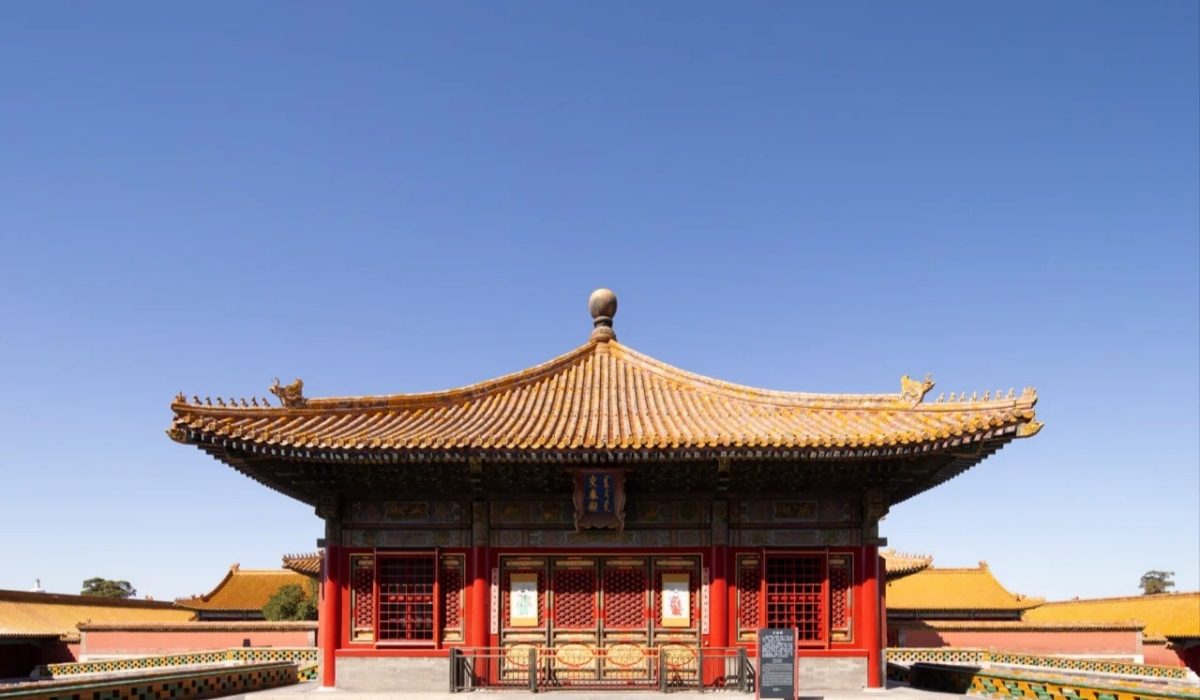
Where should we start to explore Beijing? There is no doubt that the Forbidden City is a good choice. As a highlight of the Beijing Palace, the Forbidden City offers rich cultural experiences. Among its treasures, the Hall of Union and Peace, one of the three main halls in the inner court of the Forbidden City in Beijing, is well worth a visit.
What Is the History Behind the Hall of Union in the Forbidden City?
The Hall of Union first built in 1420 during the Ming Dynasty, the hall was rebuilt in 1655, 1669, and 1798 after fire damage. Despite its smaller size, it has endured centuries of change and remains a central symbol of imperial life.
What Can I See Inside the Hall of Union in the Forbidden City?
What are the must-see landscapes in the Hall of Union and Peace in the Forbidden City in Beijing? The following is the essential content for you to see when visiting the Hall of Union and Peace in Beijing. Don’t forget to take some Forbidden City photos here—this hall’s symbolic artifacts and historical layout make it a highlight of your journey.
Shape and Roof
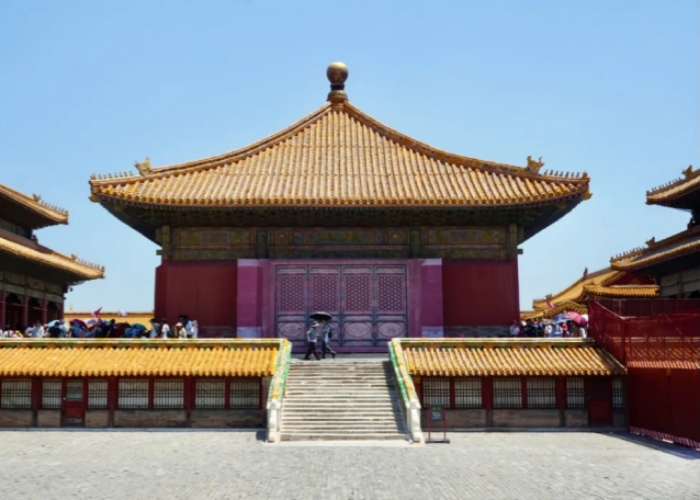
- The Hall of Union in the Forbidden Cityfeatures a square layout, symbolizing earth in traditional Chinese belief.
- Its pyramidal single-eaved roof adds a balanced and elegant look to the structure.


Interior Details
- Inside, intricate caisson ceiling patterns decorate the hall, showcasing exquisite craftsmanship.
- The floor is paved with golden bricks, reflecting the building’s imperial status within the Forbidden City.


Throne and Platform
- A small stairway leads visitors to a raised platform.
- Here, a simple sandalwood throne sits at eye level, emphasizing humility and dignity in the emperor’s private space.


Backdrop and Symbolism
- Behind the throne stands a four-leaf screen, adding to the hall’s serene atmosphere.
- A plaque with a calligraphy inscription encourages virtue in governance, reminding visitors of the emperor’s ideals.
Imperial Connection
- The plaque features handwriting by Emperor Qianlong, one of the Qing Dynasty’s most influential rulers.
- This personal touch adds historical depth to the Hall of Union in the Forbidden City.


What Is the Function of the Hall of Union?
Each palace in the Forbidden City has its unique roles and functions. Do you want to know what role the Hall of Union and Peace plays in the vast Beijing Palace? The following content will answer this question for you. If you’re planning a Forbidden City tour, this is one stop you shouldn’t miss.
Ceremonial Role
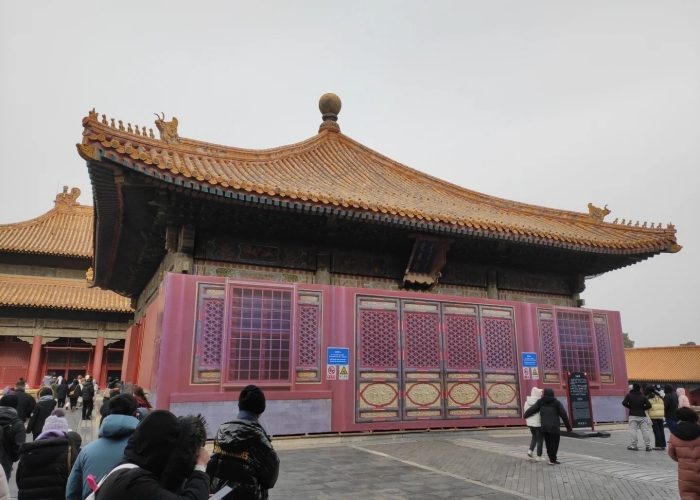
- The Hall of Union in the Forbidden City served as the ceremonial center for empresses from the mid-1500s to the early 1900s.
- Empresses received greetings here during major festivals and birthdays.
- High-ranking court members attended these formal occasions.
Storage of Imperial Seals
- Starting in 1748, Emperor Qianlong stored the twenty-five Imperial Seals in theHall of Union.
- These seals were used to approve documents and official orders.
- Access to the seals required the empress’s consent, giving her real influence in court affairs.
Symbol of Political Power
- The hall wasn’t just ceremonial—it protected key tools of imperial authority.
- Strict protocols governed the use of each seal, reinforcing the empress’s role in governance within the Forbidden City.
What Cultural Relics Are There in the Hall of Union?
The cultural relics in the Forbidden City are too numerous to count. What cultural relics are there in the Hall of Union? The following content will answer what important cultural relics in the Hall of Union are worth seeing.
Bronze Clepsydra (Water Clock)
- Made in 1745, this ancient timepiece is a traditional water clock.
- It consists offive stacked bronze vessels that drip water steadily to measure time.
- This method dates back centuries and reflects early Chinese scientific knowledge.
Mechanical Clock
- Built in 1797, this clock is housed in a three-story wooden cabinet.
- It has remained accurate for over 200 yearsand still functions today.
- The design blends Chinese artistry with mechanical innovation.
Official Timekeeping
- These clocks set the standard time for the entire Forbidden City.
- Palace life, ceremonies, and schedules followed the time shown here.
Symbol of Craftsmanship and Progress
- The clocks highlight both traditional ingenuity and technological progress.
- They represent a seamless blend of ritual, science, and precise governance that defined the Forbidden City.


This article explains all the information you must know about the Hall of Union in the Forbidden City. Follow this article and explore the Hall of Union with confidence. There are many more wonderful places in the Beijing Palace worth visiting. A Forbidden City tour offers a deep dive into China’s imperial history. This magnificent palace is a must-visit destination for your trip to Beijing.
Frequently Asked Question
How can I buy a ticket to Hall of Union?
You don’t need a separate ticket—access to the Hall of Union is included with a general Forbidden City ticket. For details on where and how to buy it, check out our guide: Where should I buy the Forbidden City tickets?
What are the opening of the Hall of Union?
The Hall of Union follows the same schedule as the Forbidden City. For full details, see our guide: What are the opening hours for the Forbidden City?
Why visit the Hall of Union?
The Hall of Union safeguarded the empire’s 25 imperial seals and symbolized the balance of cosmic yin-yang energy—giving it a unique and powerful role in the Inner Court of the Forbidden City.
How long to spend at the Hall of Union?
10-15 minutes.
Focus on seals, ceiling art, and terrace instruments (sundial/grain measure).
Is the Hall of Union accessible for wheelchairs or strollers?
Terrace viewing only.
9 marble steps lead to the hall entrance (no ramps).