

The Forbidden City, located in the heart of Beijing, China, was established in the early 15th century during the Ming Dynasty and served as the imperial palace for over 600 years. It is a must-see site in Beijing for all travelers exploring China. This article provides you with all the information you want to know about the Forbidden City in Beijing.
Why is it Called the Forbidden City?
How do you say the Forbidden City in Chinese? In Chinese, it’s known as “紫禁城” (Zǐjìn Chéng), meaning “Purple Forbidden City.”
The Forbidden City got its name because:
Forbidden: Ordinary people were strictly forbidden from entering without permission. It was the exclusive domain of the emperor, his family, court, and servants.
City: It’s a massive, walled complex (like a city within Beijing) containing palaces, temples, residences, and everything needed for the imperial court.
The Chinese name “Zǐjìnchéng” (紫禁城) directly means “Purple Forbidden City”:
Purple (紫): References the North Star (considered the celestial emperor’s home in ancient Chinese astronomy), symbolizing the emperor’s supreme status.
Forbidden (禁): Reflects the severe access restrictions.
City (城): Describes its vast, enclosed nature.
Why was the Forbidden City Built?
Establish Imperial Power
Serve as the political and ceremonial center of China, consolidating the emperor’s absolute authority.Symbolize Cosmic Order
Align with the North Star (紫微星, Zǐwēixīng), positioning the emperor as the “Son of Heaven” at the cosmic center.Strengthen Northern Defenses
Relocate the capital (from Nanjing to Beijing) to guard against Mongol invasions.Create a Self-Sustaining Imperial City
House the emperor, court, administration, and rituals within a secure, walled complex.


How Large is the Forbidden City?
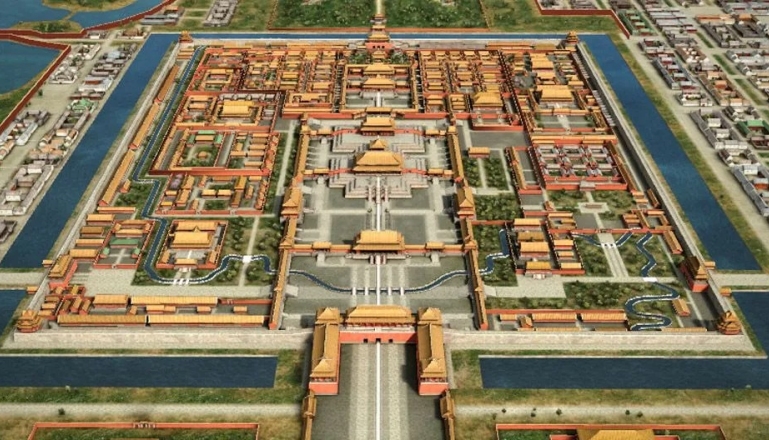
The Forbidden City covers an astounding 720,000 square meters, which is roughly equivalent to 101 football fields. Here are some key measurements:
| Indicator | Data | Reference Comparison |
|---|---|---|
| Area | About 720,000 m² | ≈ 101 standard football fields |
| Building Area | About 150,000 m² | Equivalent to 21 standard football fields |
| Wall Height | 10 meters | About 3 stories high |
| Moat Width | 52 meters | Wide enough for 10 sedan chairs to fit side by side |
| North-South Length | 961 meters | 12 minutes to walk |
| East-West Width | 753 meters | 9 minutes to walk |
How Many Buildings are There in the Forbidden City?
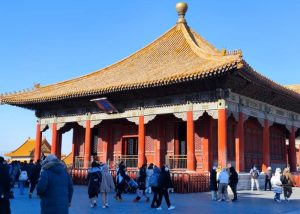
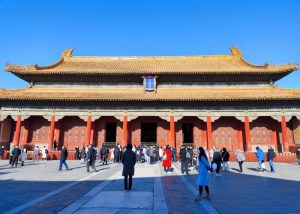
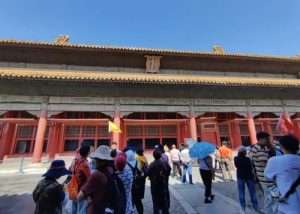
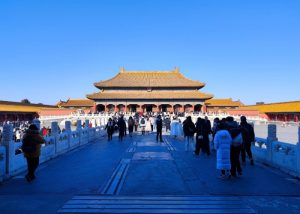
The Forbidden City contains more than 70 palatial buildings, with an official record of 78. These palaces are divided into the Outer Court (administrative area) and Inner Court (living area). Here’s an overview of the core architecture of the Forbidden City:
| Area | Main Function | Representative Buildings | Open Status |
|---|---|---|---|
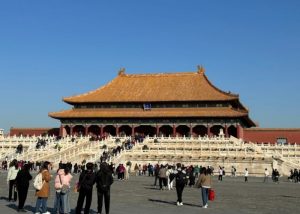
| Outer Court | Politics and Ceremonies | Hall of Supreme Harmony, Hall of Central Harmony, Hall of Preserving Harmony, Wenhua Hall , Wuying Hall | Most of the area is open |
| Inner Court | Emperor and Empress’s Life | Palace of Heavenly Purity,Hall of Union ,Palace of Earthly Tranquility ,Hall of mental cultivation | Some areas open |
| Six Palaces | Concubine’s Residences | Yikung Palace, Chuxiu Palace , Jingren Palace | Some areas open, permanent exhibitions |
| Ningshou Palace Area | Qianlong’s Retirement | Huangji Hall, Changyin Pavilion , Treasures Hall | Open, requires separate ticket |
| Imperial Garden | Royal Leisure | Qinan Palace, Duixiu Mountain | Open |
💎While the majority of the Forbidden City is open to visitors, some areas may require separate Forbidden City tickets or have specific Forbidden City opening hours.
How Many Years of History Does the Forbidden City Have?
The Forbidden City boasts over 600 years of history. Completed in 1420, it served as the imperial palace until 1912 when the last emperor abdicated. Since then, it has transformed into a museum that preserves the rich cultural and historical legacy of China’s imperial era.
How Many Emperors Lived in the Forbidden City?
From 1420 (when construction completed) to 1924 (when Puyi was expelled), the Forbidden City served as the imperial palace for 24 emperors across the Ming and Qing dynasties 159.
Breakdown by Dynasty:
Ming Dynasty (14 Emperors)
Qing Dynasty (10 Emperors)


Interesting Facts About the Forbidden City
Why Doesn’t the Forbidden City Have Trees?
The absence of trees in the outer areas of the Forbidden City, like the Three Main Halls, was a deliberate design to maintain the emperor’s authority and ensure security. Trees could potentially provide hiding spots for assassins. However, in the Inner Court and the Imperial Gardens of the Forbidden City, lush old trees provide a more tranquil atmosphere.
Why are the Walls of the Forbidden City Painted Red?
- The red walls symbolize prosperity and nobility, while the yellow roofs represent the emperor’s divine right to rule. The red and gold color scheme highlights the emperor’s power, further emphasized by the white jade railings that surround the palace.


What Do You Expect to See in the Forbidden City?
ChatGPT 说:
If you’re planning to visit the Forbidden City, here are the must-see highlights you shouldn’t miss. Here’s a quick guide to help you make the most of your visit.
Central Axis Tour: Enter through Meridian Gate, visit the Hall of Supreme Harmony, Central Harmony, and Preserving Harmony, then explore the Three Palaces and finish at the Imperial Garden.
Architectural Wonders:
Corner Towers: Intricate towers with 72 roof ridges.
Roof Levels: The Hall of Supreme Harmony features a double-eaved roof with 12 mythical beasts.
Cultural Treasures:
“Along the River During the Qingming Festival” (Northern Song)
Ru Kiln Celadon Wine Pots (only two in the world)
Qianlong Gold-Wire Inlay Box (金累丝香囊)


Differences & Connections Between the Forbidden City and Tiananmen Square
Location: Tiananmen Square is the main entrance to the Imperial City (external gate), while the Forbidden City’s main entrance is Meridian Gate (Wumen).
Function: Tiananmen Square was used for grand ceremonies and imperial processions, whereas the Forbidden City was the emperor’s residence and the heart of governance.
Visiting Tips: Tiananmen Square is free to visit, while tickets are required for the Forbidden City, with entry through the Meridian Gate.