Hall of Supreme Harmony: Your Must-See Forbidden City Icon
The Forbidden City in Beijing is a place where history is re – created. The Forbidden City Museum is divided into two parts: the Outer Court and the Inner Court. As the first palace of the Outer Court, the Hall of Supreme Harmony has become a living witness to imperial power, tradition, and art over the centuries.
Scenic Area Layout Featuring the Hall of Supreme Harmony
Central Axis Dominance
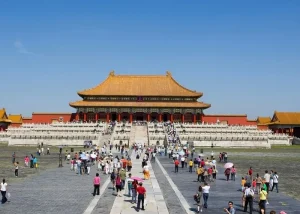
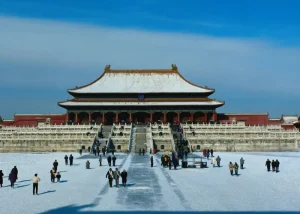
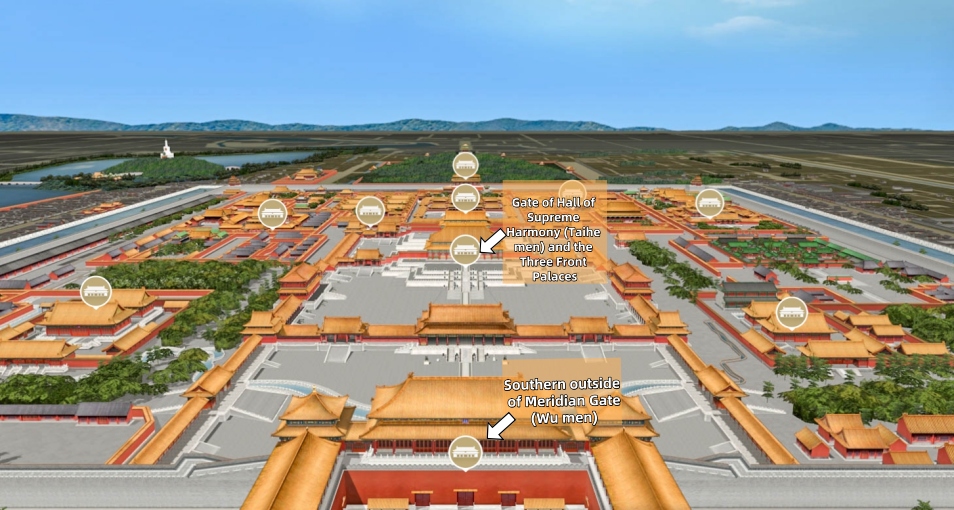
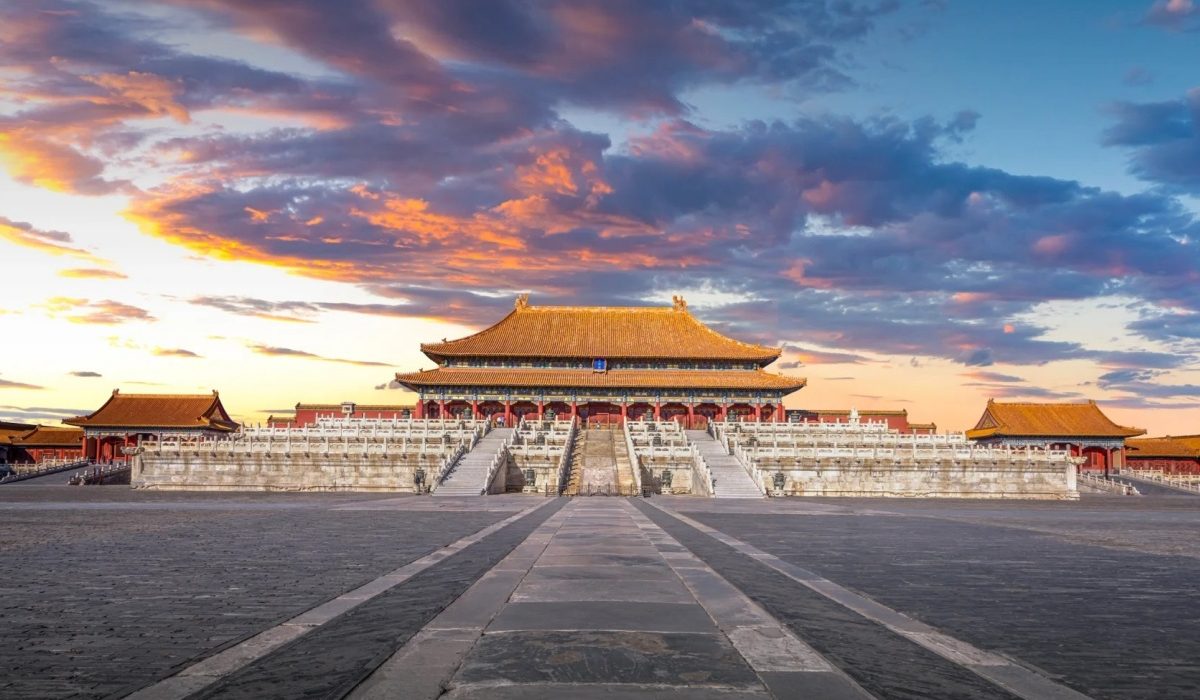
The Hall of Supreme Harmony (Taihedian) anchors the Forbidden City’s central north-south axis, positioned directly behind the Gate of Supreme Harmony (Wuhemen). It is flanked by the Hall of Central Harmony (Zhonghedian) and Hall of Preserving Harmony (Baohedian), forming the iconic “Three Great Halls” complex.
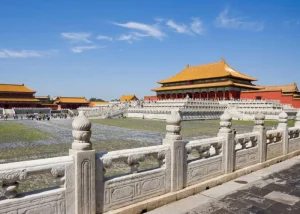
Spatial Hierarchy: The hall sits atop an13-meter triple-tiered white marble terrace—the tallest in the Forbidden City—symbolizing imperial supremacy. The terrace extends into a 30,000 m² plaza, designed to accommodate grand ceremonies and thousands of attendees.
The Forbidden City 3D model
Architectural Framework
Surrounding Structures: The hall is framed by two auxiliary pavilions:
Tiren Pavilion (East): Used for scholarly gatherings.
Drainage Engineering:The terrace features 1,138 carved stone dragon heads along its edges. During rain, water cascades through their mouths, creating a “Thousand Dragons Spouting” spectacle—a fusion of art and hydraulic engineering.
Axial Progression
Visitors approach via a sequence: Meridian Gate → Golden Water Bridges → Gate of Supreme Harmony → Hall of Supreme Harmony. This path mirrors the emperor’s ceremonial route, building anticipation through expanding courtyards.
Important Scenic Spots of the Hall of Supreme Harmony
Grain Measure and the Sundial (嘉量与日晷)
Placed symmetrically on both sides of the Hall of Supreme Harmony’s front terrace in the Forbidden City, the Jia Liang (ancient measuring vessel) and the sundial symbolize the emperor’s authority over time and standards. These ancient instruments remind visitors that the emperor was seen as the one who brought order to heaven and earth, reinforcing his supreme power in the imperial palace.
Grain Measure
Sundial
Tripod Furnace (鼎炉)
Located near the front platform of the Hall of Supreme Harmony, the tripod furnace stands as a symbol of stability and legitimacy. In ancient China, owning a tripod was a mark of power and royal authority. Here in the Forbidden City, it reinforces the emperor’s supreme rule and the important ritualistic functions of this grand hall.
Exquisite reliefs of circular dragons and walking dragons
Tripod Furnace
Tripod Furnace (蟠龙金柱)
Inside the Hall of Supreme Harmony, massive golden pillars decorate the interior. These pillars feature coiling dragons, iconic symbols of imperial power in the Forbidden City. The dragons appear alive as they spiral up the columns, adding majestic energy to the hall and emphasizing the sacred nature of the emperor’s throne.
Tripod Furnace
Tripod Furnace
The Plaque “jiàn jí suí yóu” (建极绥猷匾额)
Above the throne in the Hall of Supreme Harmony hangs a large horizontal plaque inscribed with the words “Jianji Suiyou,” written by Emperor Kangxi. This phrase means “Upholding the utmost virtue and promoting harmony,” reflecting the emperor’s divine mission to govern the imperial palace with wisdom and moral strength.
The Plaque(Jianji Suiyou)
The Plaque(Jianji Suiyou)
Golden Brick Floor (金砖墁地)
The floor inside the Hall of Supreme Harmony is paved with golden bricks. Though not made of real gold, these bricks are named for their color and superior quality. Baked and polished through a complex process, they represent strength, perfection, and the dignity of the emperor within the Forbidden City.
Golden Brick Floor
Golden Brick Floor
The Emperor’s Throne (皇帝宝座)
At the center of the Hall of Supreme Harmony sits the dragon throne, the most sacred seat in the entire Forbidden City. Raised on a platform decorated with carved dragons, the throne symbolizes the emperor’s supreme status and his divine connection to heaven.
The Emperor’s Throne
The Emperor’s Throne
Dragon Gate Treasure Box (龙门宝匣)
Beneath the throne lies the Dragon Gate Treasure Box, a mysterious feature rarely seen but often mentioned in Forbidden City lore. Believed to hold sacred texts or protective talismans, this treasure box adds an aura of spiritual protection to the emperor’s throne in the imperial palace.
Dragon Gate Treasure Box
The gold coins with Chinese inscriptions in the Dragon Gate Treasure Box
Ridge Arrangement (屋脊神兽)
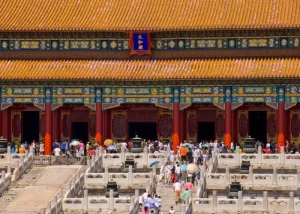
The roof ridges of the Hall of Supreme Harmony in the Forbidden City are lined with rows of mythical beasts, all arranged in strict symbolic order. This iconic hall features the maximum number—ten beasts—including a rare figure known as “Hangshi” (行什). These intricate roof decorations not only enhance the architectural beauty of the Forbidden City but also act as spiritual guardians, believed to protect the grand hall from evil influences and misfortune.
Ridge Arrangement
Ridge Arrangement
White Jade and Vermilion Steps (白玉丹陛)
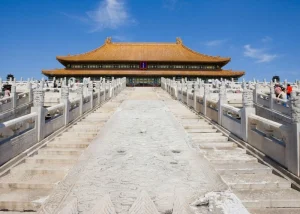
Leading up to the Hall of Supreme Harmony are stunning white jade staircases. The central staircase features a large carved stone ramp adorned with dragons soaring among clouds. This magnificent design symbolizes the emperor’s heavenly path and stands as one of the finest stone carvings in the entire Forbidden City
White Jade and Vermilion Steps
White Jade and Vermilion Steps
Historical Significance
For 500 years, this hall hosted pivotal state events:
Enthronements of Ming and Qing emperors
Imperial edict pronouncements
Military commander appointments
Imperial examination ceremonies (until 1789).
Its design reinforced cosmic harmony: the central axis aligned with the Pole Star, and numerology (e.g.9 doornails per panel) echoed imperial divinity.
Opening Hours and Ticket Information of the Hall of Supreme Harmony
Opening hours:
The Hall of Supreme Harmony is part of the Forbidden City, so you only need to pay attention to the opening hours of the Forbidden City in Beijing. For details, please click:
Tickets:
No tickets are required. It is included in the Forbidden City Scenic Area and is applicable to the regular tickets of the Forbidden City Scenic Area in Beijing. For details, please click:
A Comparative Glance: Inner vs. Outer Court Elements
To gain a deeper understanding of the characteristics of the Hall of Supreme Harmony, it would be helpful to compare the elements of the Outer Court and the Inner Court. This table highlights the key differences between imperial rule and the factors influencing imperial life.
Feature
Outer Court
Inner Court
Primary Function
State affairs, grand ceremonies, official audiences, political functions.
Private residential area, family life, empress’s ceremonies, storage of imperial seals.