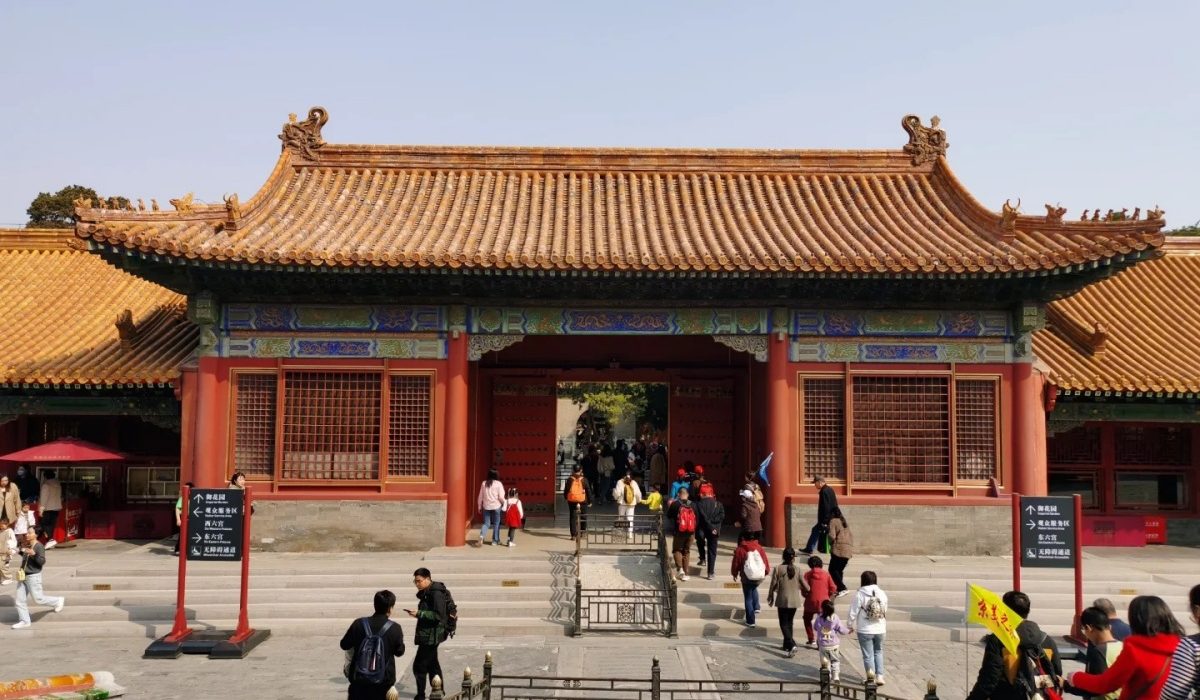
Palace of Earthly Tranquility: Forbidden City’s Inner Court
The Palace of Earthly Tranquility is a vital part of the Forbidden City’s Inner Court in Beijing. As an important structure within the Beijing palace complex, it holds deep cultural, historical, and architectural value. Let’s dive into what makes this palace so special.
What Can I Expect to See Inside the Palace of Earthly Tranquility?
The Palace of Earthly Tranquility (坤宁宫), located in the Forbidden City, is a key structure in the historic Beijing palace complex. Built in the Ming dynasty as the empress’s residence, it later served as a ceremonial hall for Qing imperial weddings. Today, it preserves important cultural relics that showcase the traditions and grandeur of China’s royal court.
1. Eastern “Warm-Study” (暖阁) Bridal Chamber
Located in this Beijing palace, the chamber—used in Qing imperial weddings (Kangxi, Tongzhi, Guangxu, Puyi)—retains:
Dragon‑and‑Phoenix wedding bed with 「百子帐」「百子被」—silk curtains and quilts embroidered with 100 children motifs.
“Double Happiness” lanterns and décor on walls and ceilings.
Palace of Earthly Tranquility
Palace of Earthly Tranquility
2. Shamanistic Ritual Assemblage
Within the Forbidden City palace, post‑1655 Manchu shaman rites added:
Altars and stoves for animal sacrifices.
Ceremonial layouts for monthly/seasonal offerings to deities like Buddha, Guān Yúncháng, and Mongolian gods.
Shamanistic Ritual Assemblage
Shamanistic Ritual Assemblage
3. Imperial Furnishings & Artifacts from the Qianlong Era
According to 18th-century inventories:
Qing inventories for this Beijing palace list:
Paintings by Jiang Tingxi and Gu Quan (hanging scrolls).
White jade plates, cloisonné incense burners, zitan wood ruyi scepter gilded with “坤宁宫”.
Imperial Furnishings & Artifacts from the Qianlong Era
Imperial Furnishings & Artifacts from the Qianlong Era
4. Architectural Heritage & Design Details
The Forbidden City palace features:
Manchu‑style modifications (post‑1655) to east‑side doors/windows with relocated entrances and lattice patterns.
Yellow‑glazed tile roofs and a double‑eave hip roof, hallmark features of this imperial Beijing palace.
Architectural Heritage & Design Details
Architectural Heritage & Design Details
What is the Historical Significance of the Palace of Earthly Tranquility?
The Palace of Earthly Tranquility, located in the Forbidden City, was originally built during the Ming dynasty as the empress’s residence. This part of the Beijing palace complex provided a private and elegant space for the empress within the sprawling imperial grounds.
Role During the Qing Dynasty
During the Qing dynasty, the palace became the venue for royal wedding ceremonies and important Manchu religious rituals. These events were vital for imperial family traditions and maintaining the dynasty’s cultural heritage.
Symbol of Feminine Harmony
The palace symbolizes the earthly energy (yin) that complements the emperor’s heavenly energy (yang), reflecting ancient Chinese beliefs about balance and harmony between male and female forces.
Palace of Earthly Tranquility
Palace of Earthly Tranquility
Smart Visitor Strategy
Photo Secrets
Wedding bed: Shoot through moon gate (natural light only)
Ritual bronzes: Zoom on animal-shaped vessel details