

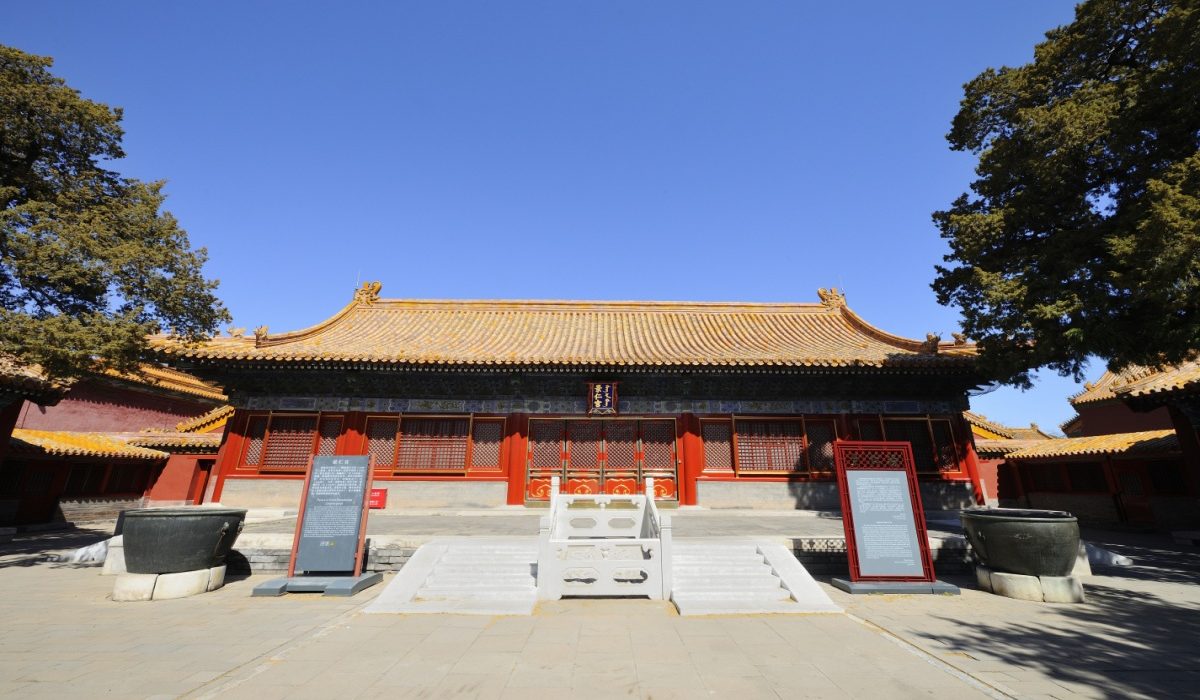
Life of the Royalty in Forbidden City
This article explores the daily life of royalty within the Forbidden City, with a special focus on the Six Western and Eastern Palaces—residential quarters that housed imperial consorts during the Ming and Qing dynasties. Nestled behind the emperor’s private halls, these palaces formed the heart of the Inner Court and were integral to the complex web of palace life. Through these living spaces, we gain insight into the roles, routines, and relationships of imperial consorts, as well as the social hierarchy and cultural practices that shaped life behind the red walls.

Where Did Royal Family Live in the Forbidden City?
The royal family in the Forbidden City lived primarily in the Inner Court, with the emperor residing in the Three Rear Palaces, and his consorts and concubines living in the Six Western and Eastern Palaces. These residential quarters were located behind the emperor’s private halls and were organized according to strict hierarchy and rank. The Six Western and Eastern Palaces were symmetrical sets of buildings, each comprising six palace complexes centered around courtyards. Higher-ranking consorts were given more prominent residences, such as the Palace of Eternal Longevity (Yongshougong) in the west and the Palace of Great Benevolence (Jingrengong) in the east.
Exploring the Six Western Palaces (Xiliugong, 西六宫)
- Palace of Eternal Longevity (Yongshougong, 永寿宫): Originally built for imperial concubines, Yongshougong later became a residence for empress dowagers and favored consorts. Its name symbolizes wishes for long life and enduring favor within the inner court.
- Palace for Gathered Elegance (Chuxiugong, 储秀宫): Known as the residence of Empress Dowager Cixi during her early years in the palace, Chuxiugong holds a reputation for quiet beauty and political significance. Its name reflects the refined grace expected of imperial women.
- Hall of the Supreme Principle (Taijidian, 太极殿): Located near the Six Eastern Palaces, this hall once served as both a study and a ceremonial space for consorts. Its name draws from Daoist philosophy, symbolizing cosmic balance and harmony.
- Palace of Eternal Spring (Changchungong, 长春宫): Changchungong was home to imperial concubines and empresses across dynasties, with many historical figures residing here. Its name evokes images of lasting vitality and youth, ideal traits for those seeking favor.
- Palace of Universal Happiness (Xianfugong, 咸福宫): Once the residence of several high-ranking consorts, Xianfugong is known for its elegant layout and serene ambiance. Its auspicious name embodies the imperial hope for shared joy and harmony in the inner court.
- Palace of Assisting Earth (Yikungong, 翊坤宫) : Yikungong was one of the most significant residences within the Western Six Palaces of the Forbidden City. Originally built during the Ming Dynasty, it later gained prominence as the residence of Empress Dowager Cixi before she rose to power. Its name symbolizes support for the empress, reflecting the palace’s association with imperial consorts of high status.


These palaces, each with its own courtyard, front hall, and rear hall, were meticulously designed to offer a blend of privacy and imperial grandeur. From the Yongzheng Emperor’s reign (1722-1735), empresses often chose one of these twelve palaces as their primary residence, moving beyond the traditional Palace of Earthly Tranquility.
Delving into the Six Eastern Palaces (Dongliugong,东六宫)
Mirroring their western counterparts, the Six Eastern Palaces are positioned on the east side of the Inner Court’s central axis, complementing the symmetrical layout of the imperial residential quarters.
- Palace of Great Benevolence (Jingrengong, 景仁宫): Notable for housing a stone screen believed to date back to the Yuan Dynasty, and once serving as a library during Emperor Kangxi’s reign.
- Palace of Celestial Favor (Chengqiangong, 承乾宫): This palace once housed empresses and high-ranking concubines, offering both seclusion and subtle political weight.
- Palace of Eternal Harmony (Yonghegong, 永和宫): Known for its serene layout and auspicious name, the Palace of Eternal Harmony once served as a tranquil dwelling for imperial consorts. Its name embodied the ideal of inner-court peace, though life inside was often more complex.
- Palace of Great Brilliance (Jingyanggong, 景阳宫): Jingyanggong stood as a refined residence where favored women of the court lived amid quiet luxury. Though less famous than others, it holds intimate stories of courtly life and ambition.
- Palace of Accumulated Purity (Zhongcuigong, 钟粹宫): Associated with Empress Dowager Ci’an, often referred to as the “Eastern Empress.”
- Palace of Prolonging Happiness (Yanxigong, 延禧宫): Known for its unique, unfinished “crystal palace” structure.


What Fascinating Anecdotes Still Echo Through the Six Western and Eastern Palaces?
The Six Western and Eastern Palaces are not merely architectural marvels; they are repositories of dramatic human stories, filled with intrigue, ambition, and personal struggles. The lives of the imperial family members, especially the empresses and concubines, played out within these walls, leaving behind a rich tapestry of historical anecdotes.
The Reign of Empress Dowager Cixi
The Palace for Gathered Elegance (Chuxiugong)
Perhaps the most famous resident associated with these palaces is Empress Dowager Cixi, a dominant figure in late Qing dynasty China. She resided in the Palace for Gathered Elegance (Chuxiugong) within the Western Palaces. It was here that she gave birth to Emperor Tongzhi. Cixi, known for her lavish lifestyle and formidable political acumen, spent vast sums of money decorating this palace, especially for her 50th birthday celebration in 1884. Her opulent refurbishment included gilt beams and even indoor plumbing, an extraordinary luxury for 19th-century Beijing. Her presence transformed Chuxiugong into a symbol of her unparalleled power and influence.
Rivalry and Co-Regency
The “Eastern Empress” and “Western Empress”
During the reigns of Emperor Tongzhi and Emperor Guangxu, China was effectively co-ruled by two empress dowagers: Cixi and Ci’an. Cixi, residing in the Palace for Gathered Elegance (Chuxiugong) in the west, and Ci’an, who lived in the quieter Palace of Accumulated Purity (Zhongcuigong) in the east, became known by their respective informal titles, “Western Empress” and “Eastern Empress.” This linguistic shorthand underscored their dynamic and often tense political partnership.
Architectural Curiosities and Unfulfilled Visions
The “Crystal Palace” of Prolonging Happiness (Yanxigong)
The Palace of Prolonging Happiness (Yanxigong) in the Eastern Palaces holds a unique story. After being ravaged by fire in 1845, plans were drawn for an ambitious, Western-style “crystal palace”—a three-story iron-and-glass conservatory. However, funding issues halted its completion, leaving behind only the concrete skeleton of what would have been a strikingly modern structure within the ancient complex. This unfinished project stands as a testament to the cultural transitions and occasional foresight within the Forbidden City.
Whispers of the Past
Ghost Stories and Imperial Lives
Like many ancient, historically charged sites, the Forbidden City and its side palaces are also subjects of numerous ghost stories. Tales of pale maidservants gliding along the red walls during thunderstorms, echoing the fates of consorts who died by childbirth or intrigue, are part of the mystique. While the Forbidden City officially dismisses these rumors as unfounded, these dramatic stories that took place within the Forbidden City are real.
Scandals and Dramas in the Inner Courts of the Consorts?
The Forbidden City, with its Six Western and Eastern Palaces, was the heart of imperial intrigue during the Ming and Qing dynasties. These palaces housed the emperor’s consorts, and their secluded nature fostered intense rivalries and scandals.
The Disappearance of Empress Ulanara (Qing Dynasty, 1760s)
The Scandal: During a southern tour in 1765, Empress Ulanara (那拉皇后) publicly cut her hair—a grave insult in Manchu culture, symbolizing mourning for the living (effectively cursing the emperor).
Disappearance: Qianlong immediately sent her back to the Forbidden City, stripped her of rank, and erased her from records.
The Poisoning of Consort Dong (Ming Dynasty, 1620s)
Consort Dong (董妃) was the beloved concubine of the Tianqi Emperor, who was largely controlled by the infamous eunuch dictator Wei Zhongxian. When Dong became pregnant, she posed a threat to Wei’s power.
The Assassination: Shortly after announcing her pregnancy, Consort Dong mysteriously died—rumored to have been poisoned.
Cover-Up: The emperor was told she died of illness, but court records later suggested Wei Zhongxian ordered her murder to prevent a rival heir.
The Murder of the Pearl Concubine (Qing Dynasty, 1900)
The Rivalry: Concubine Zhen (珍妃) was Guangxu’s favorite, supporting his 1898 reforms against Cixi’s conservatives.
The Purge: When the Boxer Rebellion erupted, Cixi ordered the court to flee Beijing—but refused to take Concubine Zhen.
The Execution: Cixi’s eunuchs threw Concubine Zhen down a well in the Forbidden City, claiming she would “rather die than be defiled by foreigners.”

Frequently Asked Questions And Answers About the Six Western and Eastern Palaces
Which concubines were the most famous residents in the Six Western and Eastern Palaces?
Empress Dowager Cixi : Initially lived in the Palace of Eternal Spring (Changchungong) and later moved to the Palace of Eternal Longevity (Yongshougong).
Consort Zhen (Pearl Concubine) : Lived in the Palace of Eternal Harmony (Yonghegong) before her tragic death.
Empress Dowager Ci’an : Resided in the Palace of Eternal Longevity (Yongshougong).
Did concubines really fight for the emperor's favor in the Six Western and Eastern Palaces?
Absolutely! Competition was fierce, and concubines used various strategies:
Gifting and flattery : Presenting the emperor with poetry, music, or crafts.
Alliances and betrayals : Forming factions with eunuchs or other concubines.
Motherhood as leverage : Bearing a son (especially the heir) elevated a concubine’s status.
What happened to concubines in the Six Western and Eastern Palaces when an emperor died ?
High-ranking consorts (like Cixi) could become empress dowagers.
Some moved to secondary palaces (e.g., the Ningshou Palace complex).
Forced to Follow the Emperor in Death (Rare, but Happened)
Sent to Buddhist or Daoist Temples (Lower-Ranked Concubines)
Allowed to Return Home (Very Rare, Mostly in Qing Dynasty)