

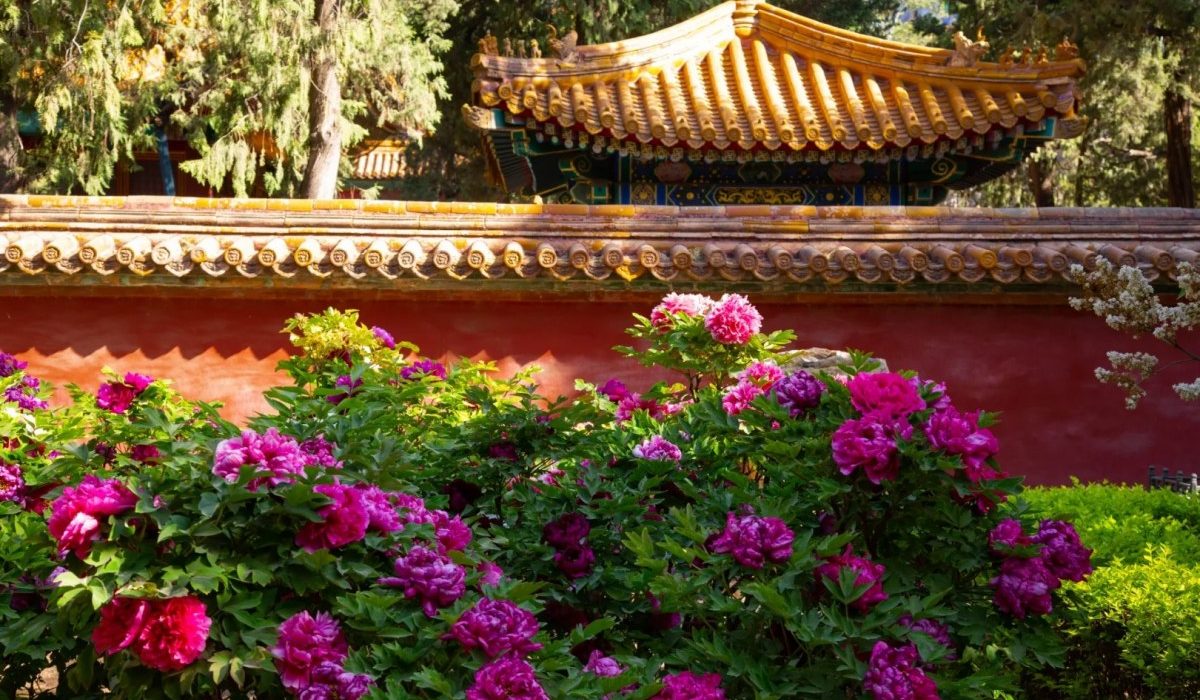
Imperial Garden: A Tranquil Escape in the Forbidden City
Step through the gates of Beijing’s Forbidden City, and beyond the grand halls lies a hidden gem: the Imperial Garden of the Forbidden City. Known as Yuhuayuan, this peaceful retreat contrasts the palace’s grandeur, inviting visitors to slow down and connect with history. This article explores its design, history, and cultural value—showing why it’s a must-see within the Forbidden City.
🌿 A Legacy of Tranquility: The Imperial Garden’s Enduring Story
⛩️ 1. Birth of an Imperial Retreat: Ming Dynasty Origins
1417: A Sanctuary Takes Root
Construction began under Emperor Yongle of the Ming Dynasty, as part of the Forbidden City’s grand vision. Designed as a private escape for emperors and their families, it offered respite from court pressures and political affairs. Imagine emperors here: strolling among ancient trees, reading poetry, or sipping tea by murmuring streams.
Qing Dynasty Enhancements
Later, Qing rulers preserved the garden’s Ming-era soul while adding subtle refinements—like rare scholar trees and carved stone motifs—blending Manchu cultural elements with classical Han design.


🌸 2. Design Philosophy: Harmony in Miniature
Symbolism Woven into Landscape
Spanning 12,000 sqm, the garden may seem modest against the palace’s vastness, yet it embodies peak Chinese garden artistry. Every element speaks:
Rocks = stability; water = life’s flow; winding paths = contemplation.
Ancient pines and cypresses (some 400+ years old) filter sunlight into dappled patterns, while pebble mosaics depict legends of luck and longevity.
Feng Shui as Foundation
Aligned with imperial cosmology, the garden’s layout placed emperors at the “axis of power,” harmonizing human creation with natural order—a living expression of “unity between heaven and earth”.


🏯What Are the Must-See Scenery in the Imperial Garden?
The Imperial Garden’s design intentionally departs from the Forbidden City‘s rigid symmetry. Instead, it embraces an organic layout, featuring winding paths, unique pavilions, and artfully arranged rockeries. This creates a sense of discovery and intimacy. You can wander freely, letting each turn reveal a new vista or a hidden detail.
🎎The Hall of Imperial Peace (Qin’andian)
At the center of the Imperial garden is the Hall of Imperial Peace (Qin’andian), a 15th-century Daoist temple where emperors sought solace. It’s the only Daoist temple on the Forbidden City’s central axis. In front of the hall stands the 400-year-old Consort Pine, symbolizing the emperor-empress bond. Gilded unicorns, believed to ward off evil, stand guard at the entrance, enhancing the hall’s mystique.


✨Pavilions of the Seasons
The Imperial Garden’s Four Seasonal Pavilions—Pavilion of Ten Thousand Springs (Wanchunting), Pavilion of Floating Green (Fubiting), Pavilion of a Thousand Autumns (Qianqiuting), and Pavilion of Clear Auspice (Chengruiting)—symbolize the seasons. The Pavilion of Ten Thousand Springs (Wanchunting) and the Pavilion of a Thousand Autumns (Qianqiuting) feature ornate roof panels adorned with golden dragons. The Pavilion of Floating Green (Fubiting) and Pavilion of Clear Auspice (Chengruiting) focus on floral and aquatic themes. These pavilions embodied the emperor’s prayers for seasonal harmony.


🏛️Gathering Beauty Hill (Duixiushan)
A prominent feature of the Imperial Garden is Duixiushan, or Gathering Beauty Hill, an artificial mountain located in the northeast. This rockery includes a unique cave and is topped by the Yujingyuan (Pavilion of Imperial View). Climbing this hill offers splendid panoramic views, allowing you to see tiled roofs stretching towards Tiananmen Square to the south and Jingshan Park to the north. It’s a perfect spot for capturing breathtaking photographs, especially during sunrise.


🌟Ancient Trees and Exquisite Details
The Imperial Garden boasts over 160 ancient trees, including cypresses and wisteria, some over 300 years old. Colored-stone pathways, jade seats, and intricately carved rocks add to its charm. Seasonal blooms like peonies and osmanthus fill the air with fragrance, enhancing the garden’s timeless beauty.


💬When to Go and How to Explore the Imperial Garden?
The best times to visit the Imperial Garden in the Forbidden City are spring and autumn. Spring brings vibrant blooms, while autumn offers stunning foliage. Both seasons have pleasant weather for strolling. Though smaller than the entire Forbidden City, the garden’s intricate design invites a slow, thoughtful exploration of its hidden details.
| Feature | Description | Significance |
|---|---|---|
| Hall of Imperial Peace (Qin’andian) | Central Daoist temple, double-roofed building. | Emperor’s worship and relaxation; only Daoist temple on central axis. |
| Consort Pine | 400-year-old pine tree in front of Qin’andian. | Symbolizes harmony between emperor and empress. |
| Four-Season Pavilions | Pavilions in each corner (e.g., Pavilion of Myriad Springs). | Represent and celebrate the four distinct seasons. |
| Gathering Beauty Hill (Duixiushan) | Artificial rockery with a cave and a pavilion (Yujingyuan). | Offers panoramic views of the Forbidden City and Jingshan Park. |
| Ancient Trees | Over 160 ancient cypresses and pines. | Contribute to the garden’s timeless beauty and shaded pathways. |
| Colored-Stone Pathways | Intricately designed paths. | Enhance visual appeal and guide visitors through the garden. |
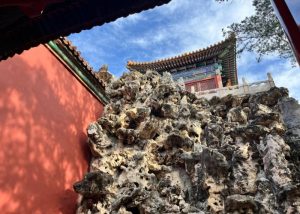
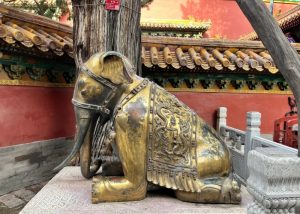
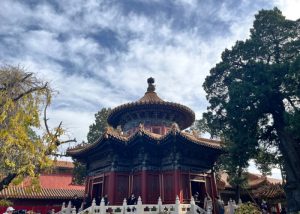
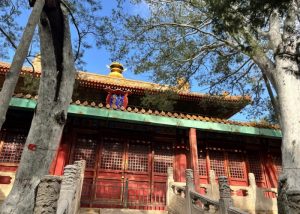
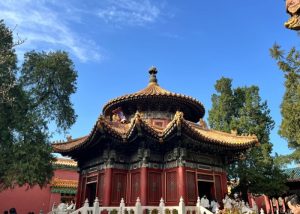
This table summarizes the key features and highlights of the Imperial Garden in the Forbidden City, providing a quick reference to its most important elements and their significance. It underscores how each component contributes to the garden’s unique charm and historical depth, enhancing the overall experience of exploring the Forbidden City.
Frequently Asked Questions
Why was Imperial Garden built?
Commissioned in 1417 during the Ming Dynasty, it was designed as a private retreat for emperors and their families to escape political pressures. Here, they strolled, meditated, and hosted intimate cultural events—away from the formal rigidity of the Outer Court.
Is photography allowed? Are there restrictions?
Yes, but avoid tripods and flash indoors (e.g., inside pavilions). Outdoor areas like pebble mosaics and rock formations are ideal for photos.
Did emperors only relax here, or was it used for other purposes?
Beyond leisure, the garden hosted imperial rituals (e.g., Mid-Autumn Festival ceremonies), political meetings with diplomats, and cultural performances—like Peking operas attended by Empress Dowager Cixi. Even imperial children played hide-and-seek among scholar rocks.