
The Hall of Mental Cultivation | Why Is Mysterious?
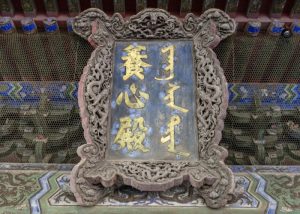
The Forbidden City, a sprawling testament to China’s imperial past, holds countless treasures. Among them, the Hall of Mental Cultivation, known as Yangxindian, stands out. Builders created it during the Ming Dynasty in 1537, This hall isn’t just any old structure. Emperors used it as their main home and office. Starting with Emperor Yongzheng, eight Qing emperors lived here. They handled daily affairs right inside. Moreover, Empress Dowager Cixi ruled from behind a screen in this very spot.


📜Why Is It Called the “Hall of Mental Cultivation”?
The name sounds like a meditation retreat, but for Qing emperors, it was a workplace, bedroom, and political powerhouse. The term “mental cultivation” (养心) comes from Confucian teachings about self-discipline and moral growth. Emperors were expected to refine their character here while ruling the empire. But this hall was far more than a symbol—it was the nerve center of the Qing Dynasty for over 180 years.
✨What Are the Must-See Things in the Hall of Mental Cultivation?
👑1. The Front Hall: Where Power Meets Routine
The Throne Area: The central hall in the Forbidden City features a simple yet symbolic throne. The “Zhongzheng Renhe” (中正仁和) plaque above it reflects Confucian ideals of fairness and benevolence. This is where emperors held daily meetings with officials, reviewed reports, and made critical decisions.
The “Qinzhong Qinxian” Archway: A hidden passageway behind the throne leads to secret chambers, used for private discussions. Its intricate wood carvings and hidden compartments reflect the atmosphere of imperial secrecy in the Forbidden City.


🎭2.The West Warm Pavilion: Secrets Behind Curtains
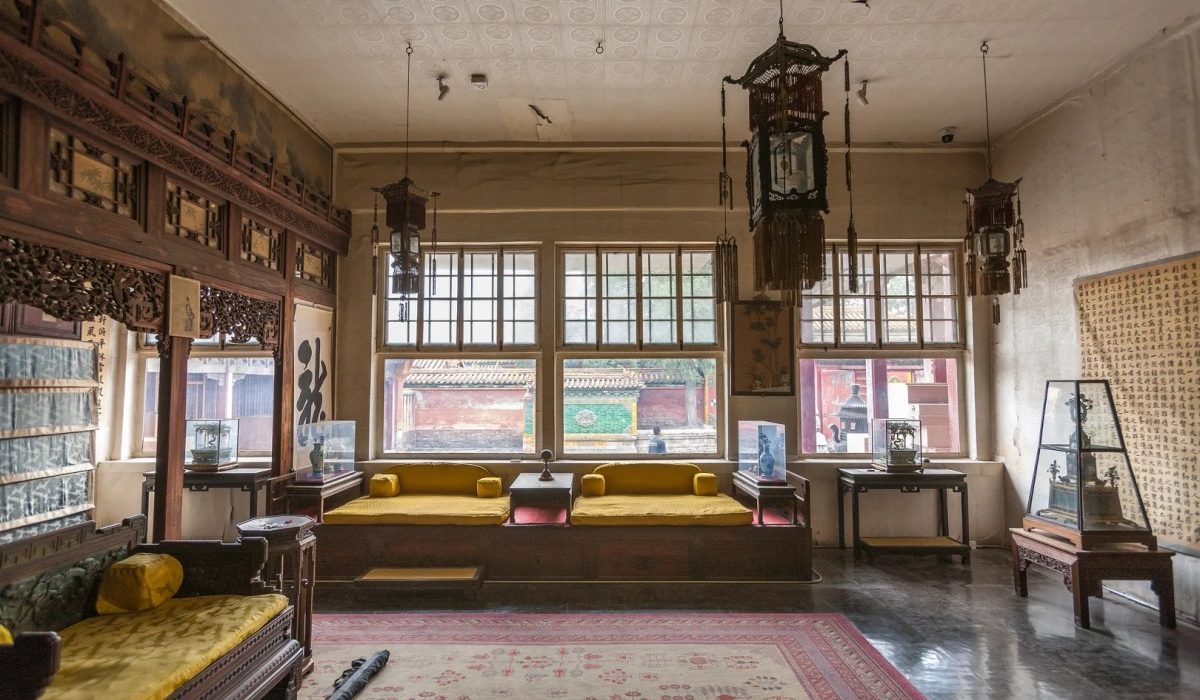
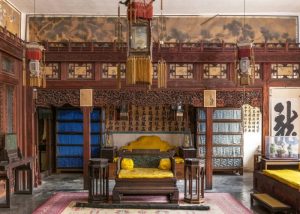
Empress Dowager’s Private Chamber: This area in the Forbidden City was where Cixi and Cian (the two Empress Dowagers) ruled China behind a yellow silk curtain during the late Qing.
Hidden Panels: The walls are covered with decorative screens depicting landscapes and poems. Look closely—some panels in the Forbidden City can slide open to reveal secret storerooms for valuables or confidential documents.


📚3. The Three Rare Treasures Hall (Sanxi Tang)
A Tiny Scholar’s Studio: This 4-square-meter room in the Forbidden City was Emperor Qianlong’s personal study. The name comes from three legendary calligraphy scrolls: Lanting Xu (王羲之), Mid-Autumn Tie (王献之), and Boyan Tie (王珣). Though two scrolls are now in Taiwan, the hall remains a shrine to Chinese art and scholarship.
Mirror Illusion: A large mirror on the wall creates a “hidden room” effect, blending art and architecture. Qianlong adored this optical trick, using it to display rare ceramics and paintings in the Forbidden City.


🕊️4. The East Warm Pavilion: Where Emperors Prayed
The “Mingchuang” Writing Desk: Every New Year’s Eve, emperors in the Forbidden City sat here to write auspicious phrases using a brush called the “Wannian Qingzhi” (万年青枝). The text was sealed in a golden box and never opened—a tradition symbolizing hopes for eternal prosperity.
Buddhist Altar: A small shrine dedicated to Tibetan Buddhism reflects Qianlong’s deep faith. Intricately carved statues of deities and prayer wheels show how religion in the Forbidden City intertwined with imperial power.


🛏️5. The Back Palace: A Glimpse into Imperial Life
The Emperor’s Bedroom: Five interconnected rooms served as the emperor’s private quarters in the Forbidden City. The “Youri Xin” (又日新) plaque above the bed encouraged daily renewal—a metaphor for self-improvement. Hidden partitions allowed emperors to switch beds discreetly, a custom rooted in Ming-era paranoia about assassins.


🕵️Why Does It Feel So Mysterious?
Contrast of Simplicity and Power: Unlike the grand Forbidden City halls, this space feels intimate. Yet every detail—the hidden doors, coded inscriptions, and carefully curated art—reflects a lifetime of control and secrecy.
Unsolved Mysteries: Why did emperors like Puyi abandon this hall in the 20th century? What secrets were buried with the Qing Dynasty? Even today, historians debate whether certain chambers held forbidden books or political tools.
Here’s a table summarizing the key periods and their impact on the Hall’s history:
| Period | Primary Use | Key Developments / Significance |
|---|---|---|
| Early Qing Dynasty (Kangxi Reign) | Imperial workshop | Production of various imperial artifacts by artisans |
| Present Day | Palace Museum exhibition | Major tourist attraction, preserving and showcasing imperial history and cultural heritage |
| Ming Dynasty (1537 onwards) | Temporary resting place | Initial construction, early use for alchemy activities |
| Late Qing Dynasty | Political center for empresses dowager | Empress Dowager Cixi and Cian “ruled behind the curtain” from its chambers |
| Mid-Qing Dynasty (Yongzheng onwards) | Primary imperial residence and administrative center | Became the de facto seat of power for eight emperors; location of important state affairs |
Situated in the Inner Court (内廷), directly west of the Qianqing Palace (乾清宫), the Hall of Mental Cultivation lies at the heart of the Forbidden City palace complex. The Hall of Mental Cultivation is far more than just a historical building. It is a place where every corner, every artifact, and every story contributes to an aura of profound mystery. Its journey from a modest retreat to the nerve center of an empire, coupled with the dramatic events that unfolded within its walls, ensures its place as one of the Forbidden City’s most captivating sites.
Frequently Asked Questions
What was the original purpose of the Hall of Mental Cultivation?
It was originally built in 1537 during the Ming Dynasty as a simple resting place for emperors.
Which emperors resided in the Hall of Mental Cultivation?
Beginning with Emperor Yongzheng (1723-1735), eight subsequent Qing emperors made it their primary residence and administrative office.
What is the significance of "ruling behind the curtain"?
This refers to the practice where empresses dowager, particularly Cixi and Cian, would listen to state affairs and influence decisions from behind a screen in the hall, symbolizing their power.
Are there any special artifacts in the hall?
Yes, the Sanxitang (Hall of Three Rarities) housed priceless calligraphy scrolls, and other chambers contained valuable imperial treasures and spiritual artifacts.
Why is it considered mysterious?
Its transformation from a humble resting place to a center of power, its secluded location, its multifunctional nature, and the historical tales of alchemy and hidden governance contribute to its mysterious allure.