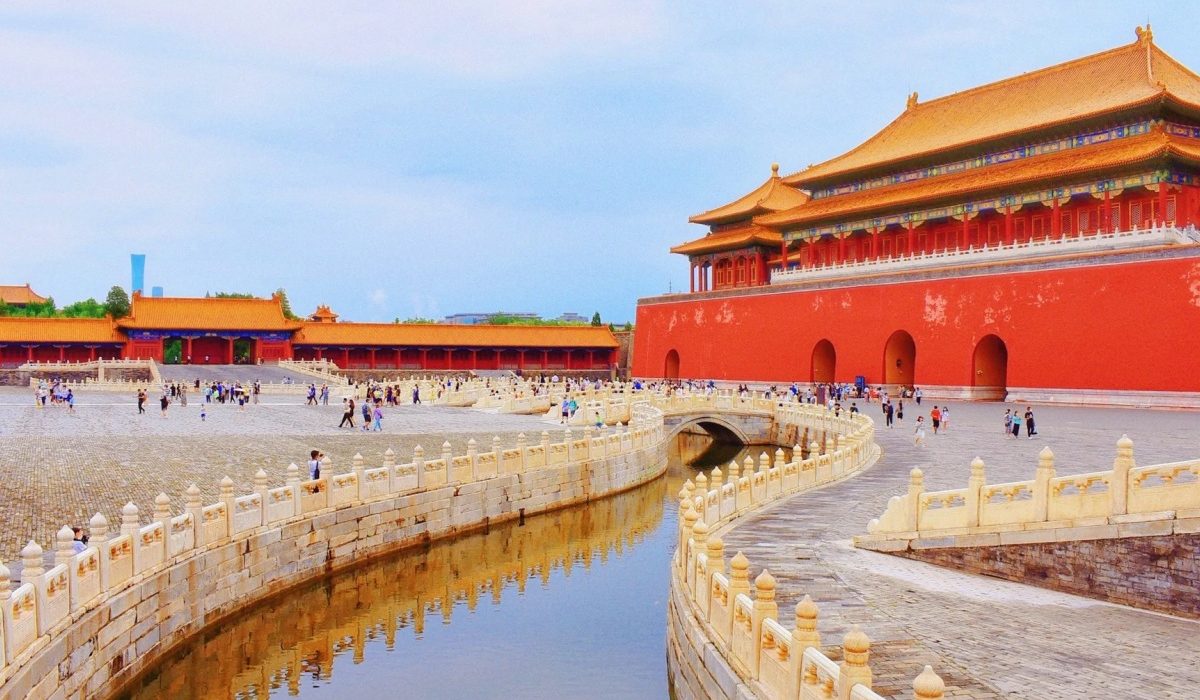
The Outer Court of the Forbidden City is where emperors ruled the nation. It was the center of politics, ceremonies, and royal authority. The three main halls here—the Hall of Supreme Harmony, Hall of Central Harmony, and Hall of Preserving Harmony—are absolute must-sees when visiting the Forbidden City in Beijing and are key highlights on any Forbidden City tour plan.
Hall of Supreme Harmony
This is the largest wooden structure in the Forbidden City. Emperors used the Hall of Supreme Harmony for enthronements, royal weddings, and New Year ceremonies. With golden roofs and carved dragons everywhere, it shows the height of imperial power.
Hall of Supreme Harmony
Hall of Supreme Harmony
Hall of Central Harmony
The Hall of Central Harmony sits between the other two main halls in the Forbidden City. This was where the emperor took a break, reviewed ceremonial speeches, and met top officials before big state events. Though smaller in size, it played a key role in the flow of imperial rituals.
Hall of Central Harmony
Hall of Central Harmony
Hall of Preserving Harmony
The Hall of Preserving Harmony was another important site in the Forbidden City. It hosted the final stage of the imperial examinations and royal banquets. Inside, you’ll see a smaller golden throne and beautiful decorative details. The space feels calm, yet it carries deep ceremonial meaning.
Hall of Preserving Harmony
Hall of Preserving Harmony
What Are the Differences Among These Three Halls?
All three halls sit on the central axis. But their roles are different.
Hall of Supreme Harmony is the most majestic. It represents imperial power and hosts grand state events.
Hall of Central Harmony is private and calm. It serves as a place for the emperor to rest and reflect before ceremonies.
Hall of Preserving Harmony combines ceremony with function. It bridges tradition and talent, hosting final imperial exams and royal banquets.
Inner Court of the Forbidden City
The Inner Court of the Forbidden City was the emperor’s private world. This was where he lived, worked, and spent time with his family. The three key palaces—the Palace of Heavenly Purity, the Hall of Union, and the Palace of Earthly Tranquility—offer a close look at royal life inside the Beijing palace. These sites are highlights of any Forbidden City tour, helping you step into the daily rhythm of imperial life.
Palace of Heavenly Purity
Located in the Forbidden City, this palace was the emperor’s residence during the Ming Dynasty and early Qing. Later, it became his office. The space feels formal but personal. Here, many imperial edicts were written.
Palace of Heavenly Purity
Palace of Heavenly Purity
Hall of Union
Also part of the Forbidden City, this small hall connects the emperor’s and empress’s palaces. It houses the imperial seals and ancient timekeeping devices. Though less grand, it symbolizes unity in royal life.
Hall of Union
Hall of Union
Palace of Earthly Tranquility
Within the Forbidden City, this was the empress’s palace during the Ming Dynasty. In the Qing Dynasty, it became the site for royal weddings and Manchu religious rituals. The red bridal chamber is especially beautiful and meaningful.
The Palace of Heavenly Purity focuses on the emperor’s power and daily life.
The Hall of Union represents balance and connection between the emperor and empress.
The Palace of Earthly Tranquility highlights family, tradition, and the empress’s important role.
The Forbidden City is more than buildings—it’s history alive. From the Outer to Inner Court, each part of this Beijing palace tells a unique story. After landing at Beijing airport, start your Forbidden City tour here and capture unforgettable photos of China’s imperial past..
Frequently Asked Questions
Best strategy to avoid crowds?
Enter at 8:30 AM → Start at Hall of Preserving Harmony → Move north.
Can I see concubine quarters?
Western/Eastern Palaces only (Cold Palaces closed).