Unveiling Jewelry and Royal Costumes in the Forbidden City
The Forbidden City, located in Beijing, invites you to explore centuries of Chinese history. Once home to Ming and Qing emperors, it now serves as the Palace Museum, offering a rare glimpse into imperial life. Within its walls lie captivating collections, including exquisite jewelry and royal costumes that showcase the opulence of the court.
Built in the early 15th century, the Forbidden City was the seat of power for over 500 years. In 1925, it opened as a museum, welcoming millions of visitors annually. Its 600-year anniversary highlights its lasting cultural significance and timeless appeal.
What Are the Must-see Jewels in the Forbidden City in Beijing?
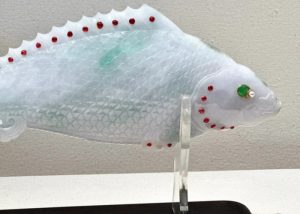
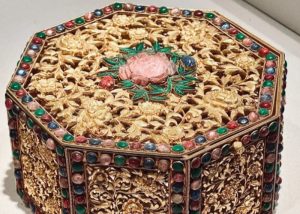
The Forbidden City’s jewelry collection offers a dazzling glimpse into imperial China’s opulence. Located in the Treasure Gallery of the Palace of Tranquil Longevity, it features intricate jade carvings, gleaming gold and silver wares, and elaborate jewelry, often adorned with pearls, emeralds, and gemstones.
👑1.Empress Xiaoduan’s Phoenix Crown (明孝端皇后凤冠)
Description: Ming Dynasty masterpiece featuring kingfisher feather inlay and 5,000+ gems (pearls, sapphires, rubies). Made for Empress Wang (1564–1620), whose tragic life reflected imperial power struggles.
Location: Treasure Gallery, Hall of Imperial Supremacy (皇极殿).Palace Museum (Forbidden City), Beijing.
Empress Xiaoduan’s Phoenix Crown
Empress Xiaoduan’s Phoenix Crown
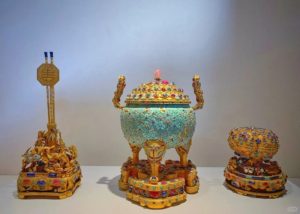
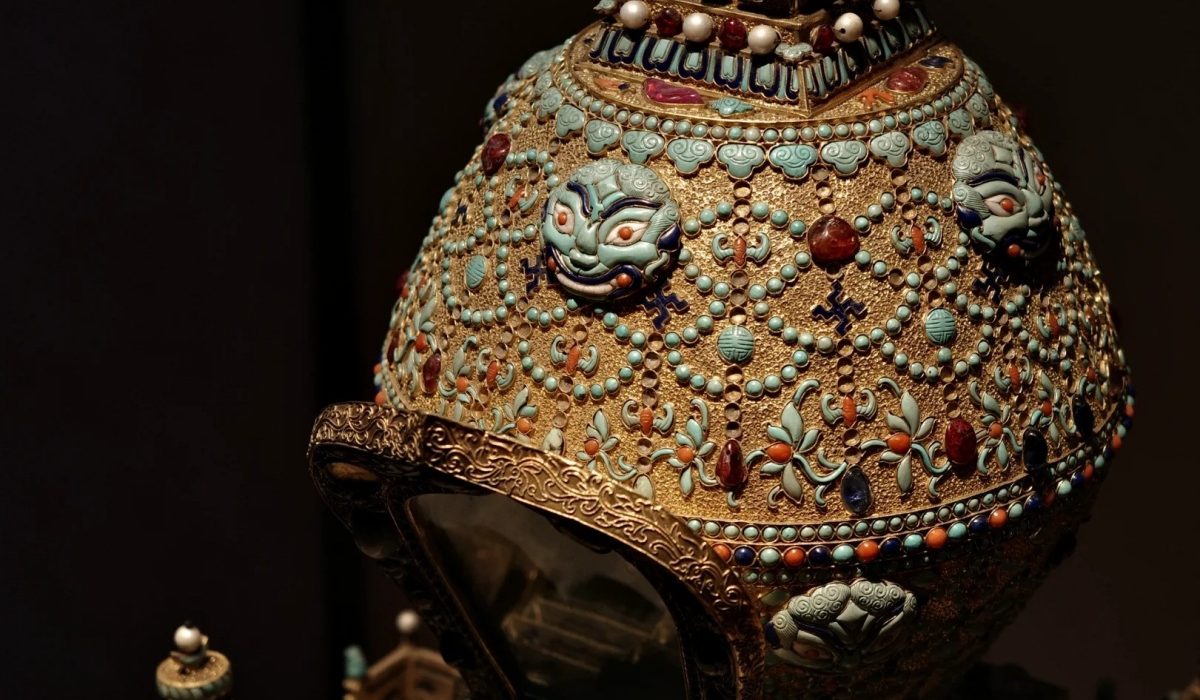
💎2.Gold-Encrusted Jeweled Cap Crown (金嵌珠宝帽顶)
Description: Qing Emperor’s ceremonial headpiece with blood-red rubies, Manchurian pearls, and gold wire dragons symbolizing supreme authority.
Location: Treasure Gallery, “Art of Adornment” section (珠光宝气单元), Palace Museum (Forbidden City), Beijing.
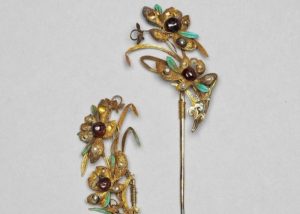
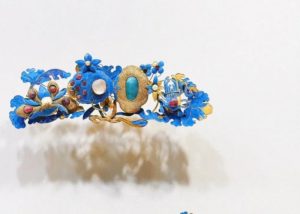
Design: Qing empress’s “haute couture” headdress with kingfisher feathers and gem-encrusted phoenixes, shimmering like starlight.
Royal Wearer: Often worn by Empress Dowager Cixi.
Location: Treasure Gallery, “Art of Adornment” section (珠光宝气单元), Palace Museum (Forbidden City), Beijing.
Gold Wire Enamel Phoenix Headdress
Gold Wire Enamel Phoenix Headdress
🌌4.Eastern Pearl Court Necklace (东珠朝珠)
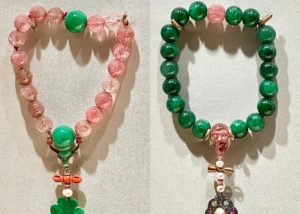
Exclusivity: 108 rare river pearls from Manchuria, reserved for emperors/empresses during state events.
Location: Palace Museum (Forbidden City), Beijing—Treasure Gallery (Zhenbaoguan).
Eastern Pearl Court Necklace
Eastern Pearl Court Necklace
What Are the Must-see Royal Costumes in the Forbidden City in Beijing?
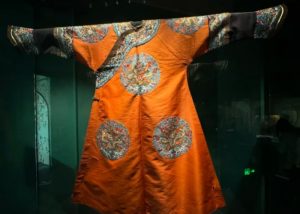
Royal costumes in the Forbidden City reveal much about imperial China’s fashion and social hierarchy. Colors like yellow were reserved for the emperor, while others, such as blue and brown, indicated lower ranks. Court officials wore blue-black, with each color representing a specific status within the hierarchy.
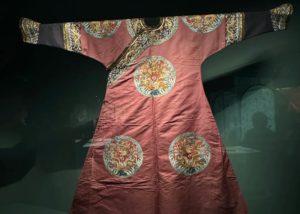
Detail: Silk-embroidered peonies and phoenixes on bright red satin, signifying nobility. Natural dyes extracted from safflower (红花) and gardenia (栀子) create the vibrant “peach blossom red” hue.
Location: Shenwumen East Long Room, alongside Empress Cixi’s casual wear.
Innovation: First Qing royal garment to incorporate Japanese cultured pearls (late 19th century).
Location: Rotating exhibits in Wuying Hall (武英殿); check current displays.
Pearl-Encrusted Robe
Pearl-Encrusted Robe
🌿 4. “Grass-Dyed” Court Attire (草木染吉服)
Technique: Plant-based dyes from indigo (蓝草), safflower, and turmeric (姜黄) create 20+ colors like “tea green”and “moon white.
Example: Daoguang Emperor’s red floral robe with plum-orchid-bamboo-chrysanthemum motifs, dyed using alkaline extraction from safflower.
Location: Treasure Gallery, Hall of Joyful Longevity (乐寿堂).
Daoguang Emperor’s red floral robe
Grass-Dyed Court Attire
Visitor Engagement with Imperial Legacy
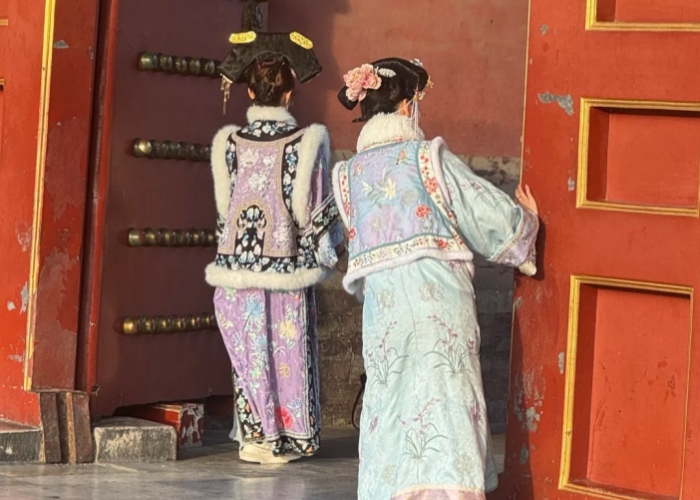
A fascinating modern trend has emerged at the Forbidden City: visitors often wear Qing Dynasty costumes to immerse themselves in the grandeur of imperial China. By donning these historical garments, they engage with the past and experience the magnificence of the palace firsthand.
Tourists are wearing imitation Qing Dynasty costumes.
Visitors enjoy posing for photographs, which they often share online, spreading the Forbidden City’s cultural heritage globally. This trend helps foster a deeper appreciation for China’s imperial legacy, bridging the past with the present.
What Are the Key Differences in Royal Attire Across Dynasties?
The imperial robes of the Ming and Qing dynasties, while both grand, had distinct characteristics. Understanding these differences highlights the evolution of royal fashion and the cultural shifts that influenced them.
Ming Dynasty Royal Costumes
Qing Dynasty Royal Costumes
Feature
Ming Dynasty Royal Costumes
Qing Dynasty Royal Costumes
Design Complexity
Generally simpler designs with fewer layers and less embellishment.
More elaborate patterns, richer colors, and extensive embroidery.
Sleeve Style
Often wider sleeves, reflecting earlier Han Chinese traditions.
Narrower sleeves with distinctive “horse-hoof” cuffs, influenced by Manchu equestrian culture.
Dragon Placement
Dragons often less numerous, sometimes less prominent in overall design.
More dragons (typically nine or more), often placed in specific patterns to maximize visibility and symbolic impact.
Fabric Preference
Favored silk and fine brocades, sometimes with woven patterns.
Continued use of silk, with increased emphasis on rich velvets and brocades with heavily embroidered motifs.
Collar Style
Often featured round or cross collars.
Distinctive standing collars, often with high necklines, a Manchu influence.
ChatGPT 说:
The Forbidden City is a timeless monument, offering a unique glimpse into imperial China. Its jewelry and royal costumes are not just artifacts but vivid stories crafted in gold, jade, silk, and gemstones. Each piece reflects the power, status, and artistry of a bygone era. From dragon-adorned robes to intricate hairpins, these treasures showcase exceptional craftsmanship and deep cultural significance, inviting visitors to connect with China’s imperial legacy and marvel at its enduring splendor.
Freauently Asked Questions
Why was yellow reserved for the emperor's robes?
Yellow was considered the most auspicious and noble color in imperial China, associated with the earth and the center. Reserving it exclusively for the emperor symbolized his divine authority and supreme position.
Can visitors wear historical costumes at the Forbidden City?
Yes, many visitors choose to rent traditional Chinese costumes, often Qing Dynasty attire, to wear while touring the Forbidden City. This allows for an immersive experience and popular photo opportunities.
What is the "Dian Cui" technique in jewelry?
The “Dian Cui” technique involves carefully inlaying iridescent kingfisher feathers onto metal jewelry, creating a vibrant blue effect. This intricate method was highly valued for its beauty and detailed artistry.