

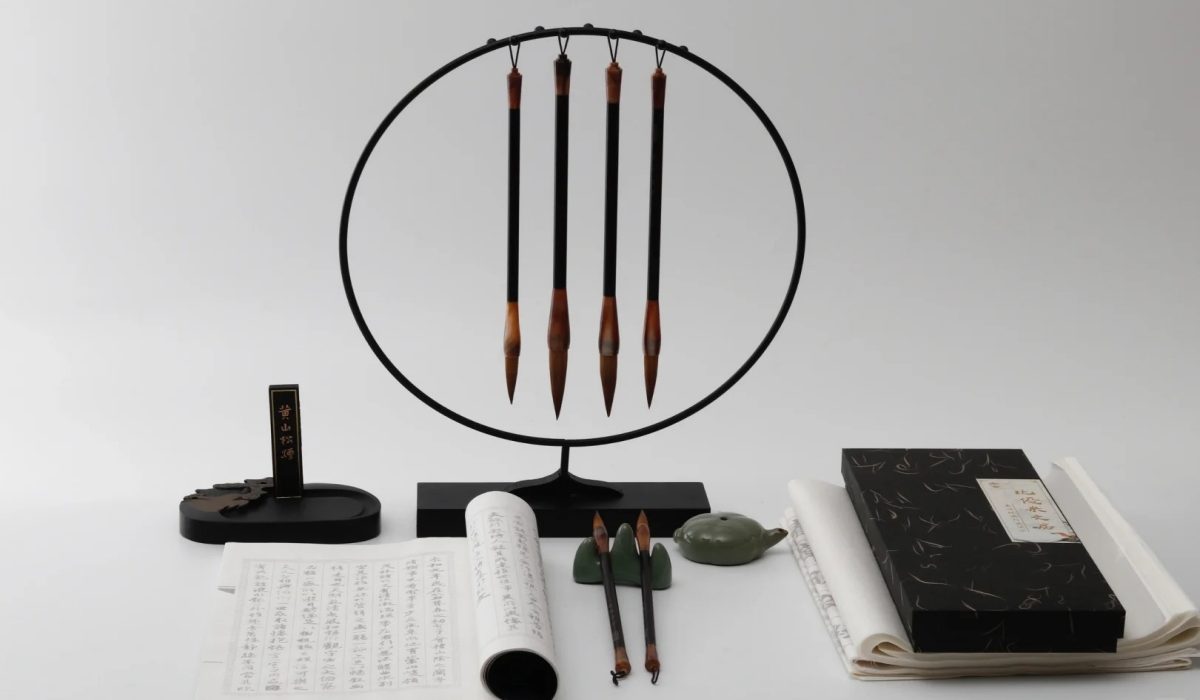
Why Four Treasures of the Study in Forbidden City Matter?
Why were four simple tools so vital to an empire’s legacy? This article explores the cultural and historical importance of the Four Treasures of the Study—brush, ink, paper, and inkstone—and reveals why they held such a revered place in the Forbidden City.
These weren’t just ordinary stationery items; they were the brush, ink, paper, and inkstone—each a masterpiece of craftsmanship, collectively pivotal to the empire’s administration, cultural expression, and the very preservation of its history. They empowered emperors, scholars, and artists, enabling them to govern, create, and educate, thus cementing their crucial role in the imperial court’s daily life and grand ambitions.
What Exactly Are These Legendary Four Treasures of the Study in the Forbdden City?
The term Four Treasures of the Study (文房四宝, wén fáng sì bǎo) refers to the fundamental implements used by Chinese scholars for writing, drawing, and painting. This expression emerged during the Southern and Northern Dynasties (420-589 AD), highlighting their long-standing importance in Chinese culture. Each treasure is unique in its characteristics and rich history:
The Indispensable Brush (Bǐ)
As the oldest component, with archaeological roots tracing back to the Zhou Dynasty (1045 BC–256 BC), the Chinese brush is an incredibly versatile tool. It comprises animal hair (from sources like deer, goat, sable, rabbit, weasel, or badger), a sturdy holder, and often a protective sheath. The type of hair and its stiffness directly influence the brush’s flexibility, ink absorption, and the nuances of the lines it produces, allowing for a vast range of artistic and calligraphic expressions. Within the Forbidden City, a rich collection of imperial brushes has been carefully preserved, showcasing exquisite craftsmanship and luxurious materials, such as Purple Hair Brush (Zi Hao Bi), Bamboo Handle Brush ,Jade Handle Brush and Ivory Handle Brush.


The Essential Inkstick (Mò)
The inkstick, or “mò”, plays a crucial role in Chinese calligraphy and painting, made by grinding a solid cake of soot and animal glue on an inkstone to create ink. In the Forbidden City, inksticks were more than just functional tools; they were symbols of imperial culture and status. The palace houses an impressive collection, with types such as:
Huimo Inkstick (徽墨)
Origin: Produced in Huizhou (modern-day Anhui)
Features: Renowned for its fine soot, strong blackness, smooth texture, and long-lasting fragrance
Status: Most highly valued by the court and scholars
Imperial Tribute Inksticks (贡墨)
Made by: Private workshops or local governments as tribute to the emperor
Decorations: Often featured dragons, phoenixes, and auspicious motifs in gold or colored designs
Function: Ceremonial or special court writing
Commemorative Inksticks(纪念墨)
Purpose: Made to celebrate important events (e.g., emperor’s birthday, military victories)
Design: Inscribed with event details and imperial inscriptions
Shaped Inksticks (造型墨)
Forms: Carved into flowers, animals, ancient coins, or zodiac figures
Purpose: Decorative and often collected as art
Calligraphy and Painting Inksticks (书画墨)
Formula: Optimized for smooth application and tonal gradation
Use: Designed for elite court artists and calligraphers
Fragrant Inksticks (香墨)
Added Scents: Sandalwood, Chinese herbs, or floral oils
Effect: Emitted pleasant aroma while grinding—favored in court studios
These inksticks were not only tools but also masterpieces, representing the sophisticated artistry and cultural prestige of the Forbidden City.


The Versatile Paper (Zhǐ)
As one of China’s Four Great Inventions, paper was essential for writing, painting, and preserving records throughout imperial history. Traditional Chinese paper—crafted from bamboo, hemp, mulberry bark, and other plant fibers—was prized for its softness, absorbency, and durability. Within the Forbidden City, the imperial court preserved a remarkable variety of such papers, reflecting both aesthetic refinement and ceremonial use. For example, bamboo paper (竹纸), valued for its strength and durability in archival use; wax paper (蜡纸), prized for its glossy finish and decorative elegance, often used for festive or literary purposes; and Xuan paper (宣纸), renowned for its soft texture, absorbency, and longevity, making it ideal for imperial calligraphy and painting.


The Foundational Inkstone (Yàn)
The inkstone provided the critical surface for grinding the inkstick with water, a process that demanded both skill and patience. The quality of the inkstone’s grain, its inherent color, and its aesthetic beauty were highly prized attributes. Many inkstones were intricately carved, elevating them beyond mere functional tools to genuine works of art. Within the Forbidden City, the imperial collection includes a rich variety of inkstones made from materials such as Duan inkstone, Taohe inkstone, ceramic inkstone, and chengni inkstone.


How Did the Four Treasures of the Study Drive Imperial Governance and Administration?
As the epicenter of imperial power, the Forbidden City was a bustling hub of bureaucracy and governance. The Four Treasures of the Study were not just present; they were absolutely indispensable for the daily machinery of the empire. Emperors, their trusted advisors, and legions of scribes relied on these tools to:
- Draft Official Documents: Every imperial decree, law, and edict that governed the vast empire was meticulously penned using these tools.
- Maintain Records: Historical records, administrative reports, and critical correspondence were carefully inscribed, ensuring continuity and accountability.
- Facilitate Communication: They enabled clear and consistent communication across the immense distances of the empire, from the emperor’s personal messages to official dispatches.
The functional design and compact layout of imperial halls, including specialized study rooms and spaces for critical discussions and elaborate ceremonies, underscore the constant and pressing need for these writing implements.
Why Were the Treasures of the Study So Central to Scholarship and Artistic Expression?
Beyond their administrative utility, the Four Treasures of the Study were deeply intertwined with the intellectual and artistic life of the Forbidden City. The imperial court placed an exceptionally high value on scholarship, intellectual pursuits, and refined artistry. These tools were fundamental for:
- Imperial Education: Princes and members of the imperial family were rigorously educated using these instruments, practicing calligraphy and composing essays as part of their comprehensive learning.
- Imperial Examination System: Scholars preparing for the crucial imperial examinations—the gateway to official careers—relied on these tools for diligent study and essay composition. Calligraphy, in particular, was seen as a mark of cultured refinement and a reflection of moral character.
- Artistic Creation: Emperors themselves, like Emperor Qianlong, were often avid patrons and practitioners of calligraphy and painting. The Four Treasures of the Study allowed for the creation of exquisite artworks, including intricate paintings, elegant calligraphy scrolls, and annotated texts, which not only adorned the palace but also contributed significantly to the preservation of China’s rich artistic heritage.
Frequently Asked Questions About the Four Treasures of the Study in the Forbidden City
What is the origin of the term "Four Treasures of the Study"?
The term “Four Treasures of the Study” (文房四宝, wén fáng sì bǎo) originated during the Southern and Northern Dynasties period (420-589 AD) in China. It refers to the essential tools used by scholars and artists for writing and painting.
Were the Four Treasures used only by the emperor in the Forbidden City?
While the emperor certainly used the finest versions of the Four Treasures, they were also extensively used by imperial officials, scholars, scribes, and members of the imperial family for various administrative, educational, and artistic purposes within the Forbidden City.
Can I see the Four Treasures of the Study if I visit the Forbidden City today?
Yes, many of the original Four Treasures of the Study, including ornate brushes, inksticks, and inkstones, are preserved and displayed in the Forbidden City, particularly in areas like the Treasure Gallery (珍宝馆). They offer a direct connection to imperial court life and artistry.